Enjoy Thanksgiving Without Guilt: Balanced Eating During the Holidays
Guilt does not improve nutrition or well-being. Eating regular meals before the holiday dinner helps prevent the quick, uncomfortable overeating many people experience. Satisfaction is just as important as nutrition and often leads to steadier appetite later. Balanced holiday eating is a mindset that supports both pleasure and comfort.
Why Holiday Eating Feels Emotionally Loaded
The holidays bring together food, family and traditions, which naturally adds emotional weight to the day. Many wellness-focused people feel pressure to stay “on track,” while others skip meals to save up for Thanksgiving dinner. When you arrive at the table hungry or stressed, cravings feel stronger and eating becomes rushed, which often leads to discomfort and guilt afterward.
Your body generally feels better with steady nourishment. Regular meals help stabilize energy and hunger signals, a pattern supported by guidance from the Academy of Nutrition and Dietetics.
Ignoring hunger rarely makes it go away. More often, it intensifies it later, making the holiday meal feel more chaotic than calm. Approaching the day with consistency rather than restriction sets the stage for a more enjoyable evening.
What Balanced Eating Actually Looks Like on Thanksgiving
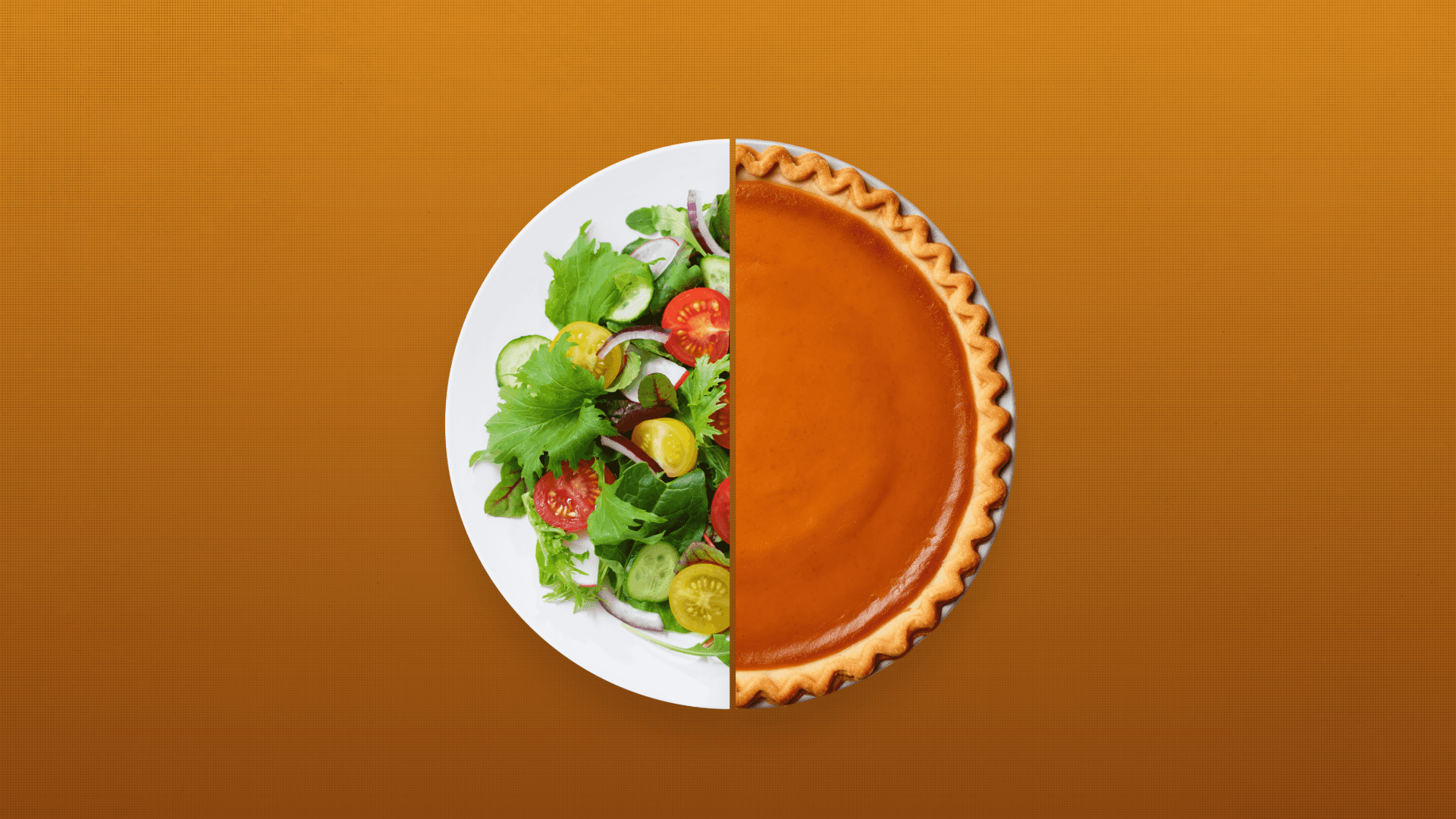
Balanced holiday eating is not strict or punitive. It simply allows grounding foods like proteins or vegetables to sit alongside your favorite traditional dishes. A mix of nourishing and celebratory foods can help you stay comfortable without dimming the joy of the meal.
Slowing down before and during the meal helps you reconnect with your hunger cues. This approach aligns with principles from Intuitive Eating, which highlights satisfaction as a central part of balanced eating. When you give yourself permission to enjoy the foods that matter most to you, fullness becomes easier to identify and overeating often naturally decreases.
Letting Go of Holiday Food Guilt
Holiday guilt often stems from the idea that certain foods are “bad” or that you must earn or compensate for what you eat. Yet food guilt tends to fuel more stress, not healthier choices. It also gets in the way of a holiday meant to bring people together.
It can help to remember that food holds cultural and emotional meaning, especially at Thanksgiving. A more compassionate mindset allows for satisfaction, which supports steadier appetite and more intuitive eating habits long term. For a broader look at what balanced nutrition can mean across the year, the Dietary Guidelines for Americans provides a helpful framework.
Simple Habits That Make the Day Feel Better
Thanksgiving tends to feel smoother when your day includes a few steady routines. Eating breakfast helps you stay grounded. Having a light lunch keeps hunger at a manageable level. Drinking water throughout the day supports energy and digestion. Light movement can calm nerves and refresh your mood.
When it is time for the main meal, think about presence instead of perfection. Notice which foods taste the best and focus your attention there. Slow your pace enough to enjoy each bite. If you reach a point where you feel pleasantly satisfied, give yourself permission to stop or pause. If you want seconds, you can have them. There is no pressure to do it all at once. Balanced eating supports comfort rather than control.
Why Emotions Play Such a Big Role
Holidays often stir up emotions. Maybe you feel excited or sentimental. Maybe you feel stressed, anxious or tired. All of these feelings affect appetite. Recognizing your emotional landscape can help you understand your eating patterns with more compassion. If the moment feels heavy or overwhelming, a short break outside or a few slow breaths can help you reconnect to your body.
Emotional eating sometimes shows up during the holidays, and that does not make you weak or undisciplined. It makes you human. Food can be comforting, and there is nothing wrong with that. The goal is not to eliminate emotional eating but to support yourself with kindness while still tuning in to what your body needs.
Finding Your Balance Again After the Meal
After Thanksgiving, many people feel tempted to “make up for it.” Skipping meals or pushing through an intense workout seems like the responsible thing to do, but it usually creates more imbalance. A more grounded approach is to return to your normal meal pattern. Eating consistently the next day supports steady energy, clearer hunger cues and a calmer mindset. Hydration and gentle movement like walking can also help you feel refreshed.
Your body is resilient. One holiday meal does not define your health. What matters is the collection of habits you practice most of the time, and it is much easier to maintain those habits when they come from a place of trust instead of punishment.
Frequently Asked Questions
How can I feel more in control during a large holiday meal?
Steady meals earlier in the day help prevent strong hunger later. A calmer body makes more intentional eating feel natural.
Is enjoying dessert going to hurt my progress?
Dessert is part of the celebration. Allowing it without guilt supports satisfaction and helps prevent the restrict-overeat cycle.
Should I load up on vegetables first?
If vegetables help you feel grounded, include them, but you do not need to force them. A mix of foods you enjoy often leads to the best balance.
What should I do if I feel too full afterward?
Give yourself time to rest, drink water and return to normal eating the next day. Overly full moments are a normal part of life.
How do I stay balanced when traveling?
Try to keep familiar patterns in place. Regular meals, hydration and gentle movement help anchor your body even when schedules change.
Conclusion
Thanksgiving offers a chance to pause, connect and enjoy foods that carry meaning. Balanced eating during the holidays becomes much more natural when you let go of guilt and focus on steady nourishment, presence and satisfaction. Nurish’d is here to support that process with expert guidance, practical tools and a compassionate approach to eating well. With the right mindset, your holiday table can feel joyful, nourishing and completely aligned with your well-being.