Home Microbiome Test vs. Clinical Testing: What's the Difference? | Nurish'd

Home Microbiome Test vs. Clinical Testing: Understanding the Difference

There are two broad categories of microbiome testing available today: direct-to-consumer (DTC) home tests marketed primarily to wellness consumers, and clinical-grade testing used by physicians and functional medicine practitioners. Understanding the difference helps you choose the right level of testing for your health goals — and understand how Nurish'd bridges both worlds.

Order Your Test Kit

Join thousands getting expert dietitian support for:

$0*

*Dependent on your plan's coverage and co-pay structure.

Direct-to-Consumer Home Tests

DTC home microbiome tests (Viome, Ombre, Thryve, and others including Nurish'd's consumer offering) are:

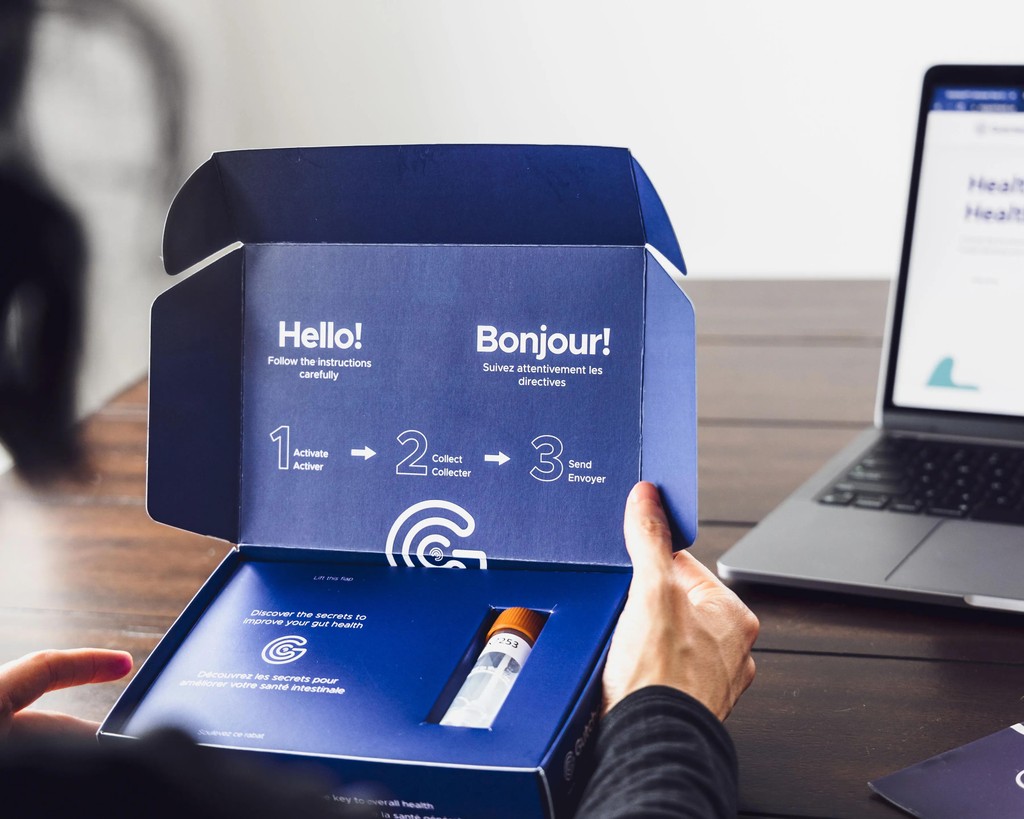
Accessible: No physician order required. Order online, receive a kit, collect a stool sample at home, mail it back, receive results digitally.

Affordable: Typically $79–$299 depending on comprehensiveness.

Variable in quality: Sequencing quality, database size, and report depth vary considerably across providers.

Limited in clinical interpretation: Most provide algorithmically generated food recommendations or wellness scores. Without credentialed clinical interpretation, the actionability of results varies.

Not covered by insurance: As self-pay wellness products.

Clinical-Grade Microbiome Testing

Clinical microbiome testing (GI-MAP by Genova Diagnostics, Doctor's Data stool tests, Diagnostic Solutions panels) is:

Ordered by a physician or qualified practitioner: Requires a clinical relationship and is used in functional medicine, gastroenterology, and integrative medicine practices.

More comprehensive: Often includes pathogen screening, parasitology, yeast/fungal markers, and inflammatory markers alongside microbiome data.

Expensive: Typically $300–$600+ without insurance coverage; sometimes covered if physician-ordered for specific clinical indications.

Clinically interpreted: Results are reviewed by the ordering practitioner in the context of your full clinical picture.

High resolution: Often uses qPCR targeting specific clinically relevant pathogens and organisms rather than broad sequencing.

Clinical microbiome testing (GI-MAP by Genova Diagnostics, Doctor's Data stool tests, Diagnostic Solutions panels) is:

Ordered by a physician or qualified practitioner: Requires a clinical relationship and is used in functional medicine, gastroenterology, and integrative medicine practices.

More comprehensive: Often includes pathogen screening, parasitology, yeast/fungal markers, and inflammatory markers alongside microbiome data.

Expensive: Typically $300–$600+ without insurance coverage; sometimes covered if physician-ordered for specific clinical indications.

Clinically interpreted: Results are reviewed by the ordering practitioner in the context of your full clinical picture.

High resolution: Often uses qPCR targeting specific clinically relevant pathogens and organisms rather than broad sequencing.

How Nurish'd Bridges Both Worlds

Nurish'd's model provides consumer accessibility with clinical-grade interpretation:

Consumer accessible: No physician order required; order online, test at home, results to your digital account.

Clinically interpreted: Unlike most DTC tests, your results are reviewed by a registered dietitian — a credentialed clinician who interprets your data in the context of your health conditions and goals.

Insurance-integrated: While the test itself is self-pay, the dietitian sessions that follow can be billed to your insurance plan for qualifying diagnoses — a pathway unavailable with purely consumer wellness tests.

Medically tailored meals: Results connect to meal delivery designed around your microbiome findings — a clinical implementation pathway no other testing model provides.

For people who need clinical-grade pathogen screening or who are working with a gastroenterologist on specific GI disease management, physician-ordered clinical testing may be more appropriate. For people seeking comprehensive gut health assessment with actionable dietary guidance, Nurish'd's model provides the most complete consumer-accessible option.

Get Started with Your Microbiome Test
Is the microbiome test covered by insurance?
Microbiome testing is typically not covered by traditional health insurance. However, Nurish'd microbiome tests are HSA and FSA eligible — meaning you can use your pre-tax health savings account or flexible spending account dollars to cover the cost and reduce your effective out-of-pocket expense.

Good news on the clinical side: the registered dietitian sessions that accompany your results through Nurish'd are billable to most major insurance plans for qualifying diagnoses (diabetes, CKD, heart disease, obesity, eating disorders, and more). Many patients pay little to nothing for their RD sessions while paying out-of-pocket or through HSA/FSA for the test itself.

Ready to get started? Here's how:

New to Nurish'd?
Create your free account and order your microbiome test — receive your kit, complete your sample at home, and have results uploaded directly to your account. Book an RD session to interpret your results and build your personalized nutrition plan. HSA/FSA cards accepted at checkout.

Already a Nurish'd member?
Purchase your microbiome test here — your results sync automatically to your account. HSA/FSA eligible.

Want to learn more before you commit?
Explore our microbiome testing page — what we test for, how the process works, and what your results include.

Nurish'd is the only platform where your microbiome test results connect directly to a registered dietitian's interpretation and a personalized meal plan. The test is the starting point — what you do with the results is what changes your health.

What Happens After Your Microbiome Test

Most microbiome tests hand you a PDF and leave you to figure it out. Nurish'd does something fundamentally different. After your sample is processed and your results are uploaded to your Nurish'd account, you connect with a registered dietitian who reviews your microbiome data in the context of your health history, current diet, symptoms, and goals. Your RD translates the science into a practical, personalized nutrition plan — specific foods, meal patterns, and dietary strategies targeted at your microbiome profile and your health condition. From there, Nurish'd's medically tailored meal delivery can bring that plan to life — meals designed around your microbiome results and your dietitian's recommendations, delivered fresh to your door. The test is the starting point. The nutrition plan is where the health outcomes happen.

Most microbiome tests hand you a PDF and leave you to figure it out. Nurish'd does something fundamentally different. After your sample is processed and your results are uploaded to your Nurish'd account, you connect with a registered dietitian who reviews your microbiome data in the context of your health history, current diet, symptoms, and goals. Your RD translates the science into a practical, personalized nutrition plan — specific foods, meal patterns, and dietary strategies targeted at your microbiome profile and your health condition. From there, Nurish'd's medically tailored meal delivery can bring that plan to life — meals designed around your microbiome results and your dietitian's recommendations, delivered fresh to your door. The test is the starting point. The nutrition plan is where the health outcomes happen.

Dietitian listeing to a client on a virtual appointment

45:38

Dietitian listeing to a client on a virtual appointment

45:38

Frequently Asked Questions

Does a regular doctor order microbiome tests?
Most gastroenterologists and primary care physicians don't routinely order consumer-style microbiome diversity testing. Functional medicine practitioners are more likely to order clinical stool tests. If you want microbiome testing connected to your medical care, Nurish'd's model of consumer testing with RD interpretation provides the most accessible clinical pathway.

Can I share my home test results with my doctor?
Yes — you can share any test results with your physician. However, most conventionally trained physicians are not yet deeply familiar with microbiome test interpretation. A Nurish'd registered dietitian is better positioned to translate results into clinical nutritional action.

Is GI-MAP testing better than a consumer microbiome test?
GI-MAP uses targeted qPCR for specific organisms and pathogens, providing high sensitivity for specific clinical targets. It's particularly valuable when pathogen screening or specific dysbiosis markers are the clinical question. For general microbiome diversity and ecosystem assessment, high-quality sequencing-based tests are complementary rather than inferior.

Does a regular doctor order microbiome tests?
Most gastroenterologists and primary care physicians don't routinely order consumer-style microbiome diversity testing. Functional medicine practitioners are more likely to order clinical stool tests. If you want microbiome testing connected to your medical care, Nurish'd's model of consumer testing with RD interpretation provides the most accessible clinical pathway.

Can I share my home test results with my doctor?
Yes — you can share any test results with your physician. However, most conventionally trained physicians are not yet deeply familiar with microbiome test interpretation. A Nurish'd registered dietitian is better positioned to translate results into clinical nutritional action.

Is GI-MAP testing better than a consumer microbiome test?
GI-MAP uses targeted qPCR for specific organisms and pathogens, providing high sensitivity for specific clinical targets. It's particularly valuable when pathogen screening or specific dysbiosis markers are the clinical question. For general microbiome diversity and ecosystem assessment, high-quality sequencing-based tests are complementary rather than inferior.